

Why Choosing the Right Machine is Critical?
Incorrect or inadequate machine selection brings along many problems ranging from capacity losses to quality problems, from unplanned downtime to high maintenance costs. Therefore, machine selection is one of the most critical investment decisions of casting plants.
Productivity in foundries is a multi-dimensional concept that directly affects not only production speed but also quality, cost, continuity and sustainability. The basis of this efficiency is the right casting machines selected in accordance with the needs of the facility.


Efficiency is Not Just Speed
Although productivity is often associated with production volume, true productivity for foundries means stable, repeatable and controlled production.
Thanks to the right choice of machine:
- Part quality is standardised
- Scrap rates fall
- Energy consumption is optimised
- Labour force is used more efficiently
- Production continuity is ensured
All of these elements determine the total performance of the plant.

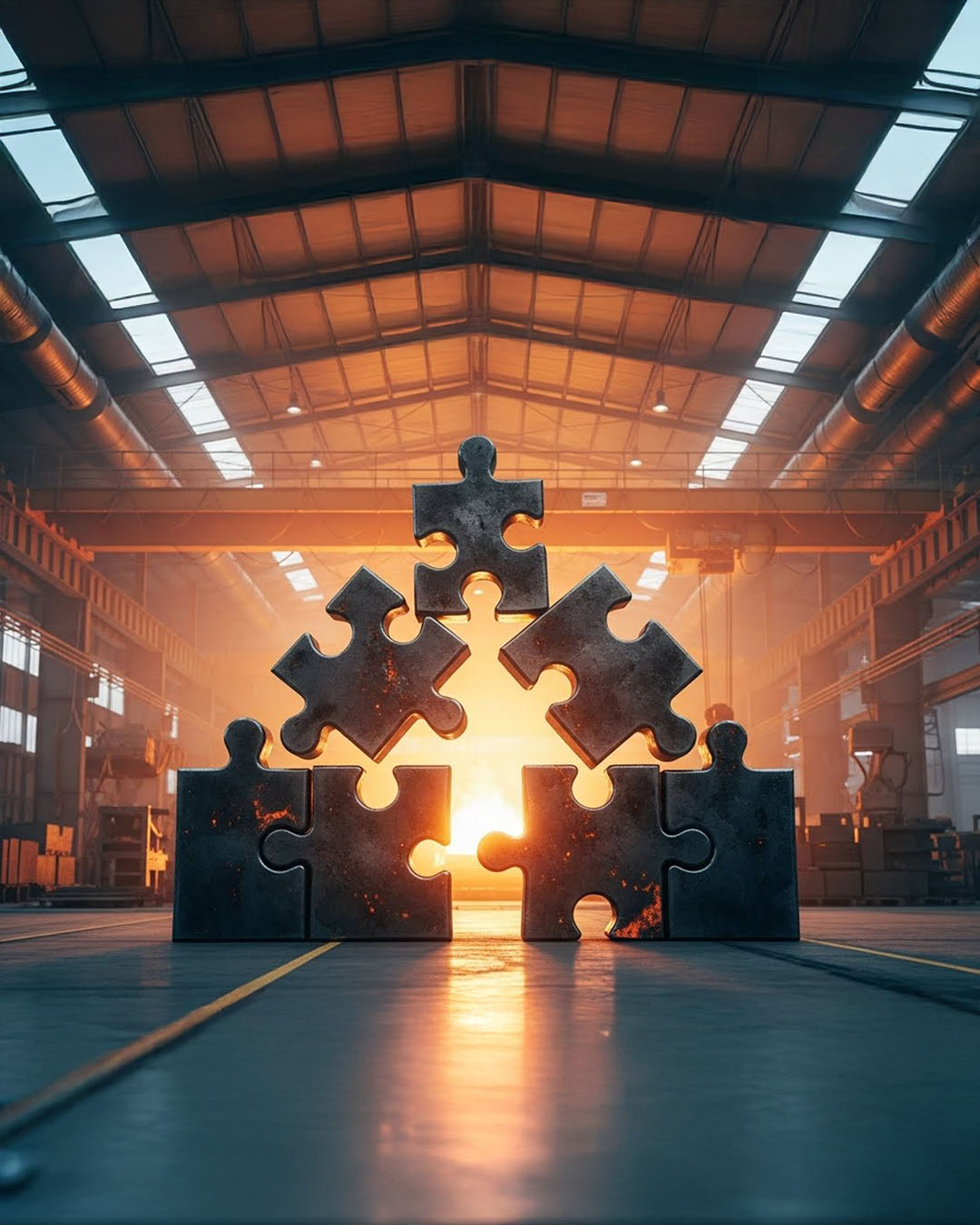
Each casting plant has a different production structure, capacity and target market. For this reason, a “uniform” machine approach leads to a loss of efficiency in the long term.
Machine Selection Suitable for Facility Needs
Each casting plant has a different production structure, capacity and target market. For this reason, a “uniform” machine approach leads to a loss of efficiency in the long term.
The following criteria must be taken into consideration when selecting the machine:
- Type and weight of the part to be produced
- Targeted daily and annual capacity
- Sand and binder systems used
- Automation level and operator requirements
- Existing facility infrastructure
The machines selected in line with these parameters reveal the real potential of the plant.
Correct Design, Less Loss
Not only the capacity but also the engineering design of the machine is decisive on productivity. Systems with balanced flow, correct distribution of mechanical loads and wear-resistant systems minimise the losses that may occur during production.
Well designed casting machines:
- Provides more stable operation
- Reduces the need for adjustment and calibration
- Minimises operator errors
- No performance degradation in long-term production
This is directly reflected in production quality and continuity.
Impact of Maintenance and Service Processes on Productivity
An efficient casting line must be efficient not only during operation but also during maintenance. Machines that are difficult to maintain and have limited access negatively affect productivity by extending production downtimes.
Maintenance criteria should not be ignored when choosing the right machine:
- Easy access to service points
- Modular and interchangeable parts
- Long-life components
- Structure suitable for planned maintenance system
These features ensure that the plant sticks to the production schedule.
Long Term Investment Perspective
Casting machine selection should be evaluated not by short-term costs but by long-term total cost of ownership. Machines with low initial investment costs but high operating costs reduce productivity over time.
A well-chosen machine:
- Consumes less energy
- Generates lower maintenance costs
- Stable performance for many years
- Adapts to the growth of the plant
This shortens the return on investment period.
Conclusion: The Right Machine is the Basis for Efficient Production
Productivity in foundries is not achieved by coincidence, but by correct engineering decisions. The most important of these decisions is the selection of durable and service-friendly casting machines suitable for production needs.
As ELM Foundry Machinery, we aim to develop machine solutions focused on efficiency, continuity and quality, taking into account the unique production dynamics of each facility. Because we know that the right machine shapes not only the production but also the future of the entire casting plant.